
The meeting after the meeting.
Everyone sounds professional. Yet decisions remain stuck – and the real meeting begins in the corridor.
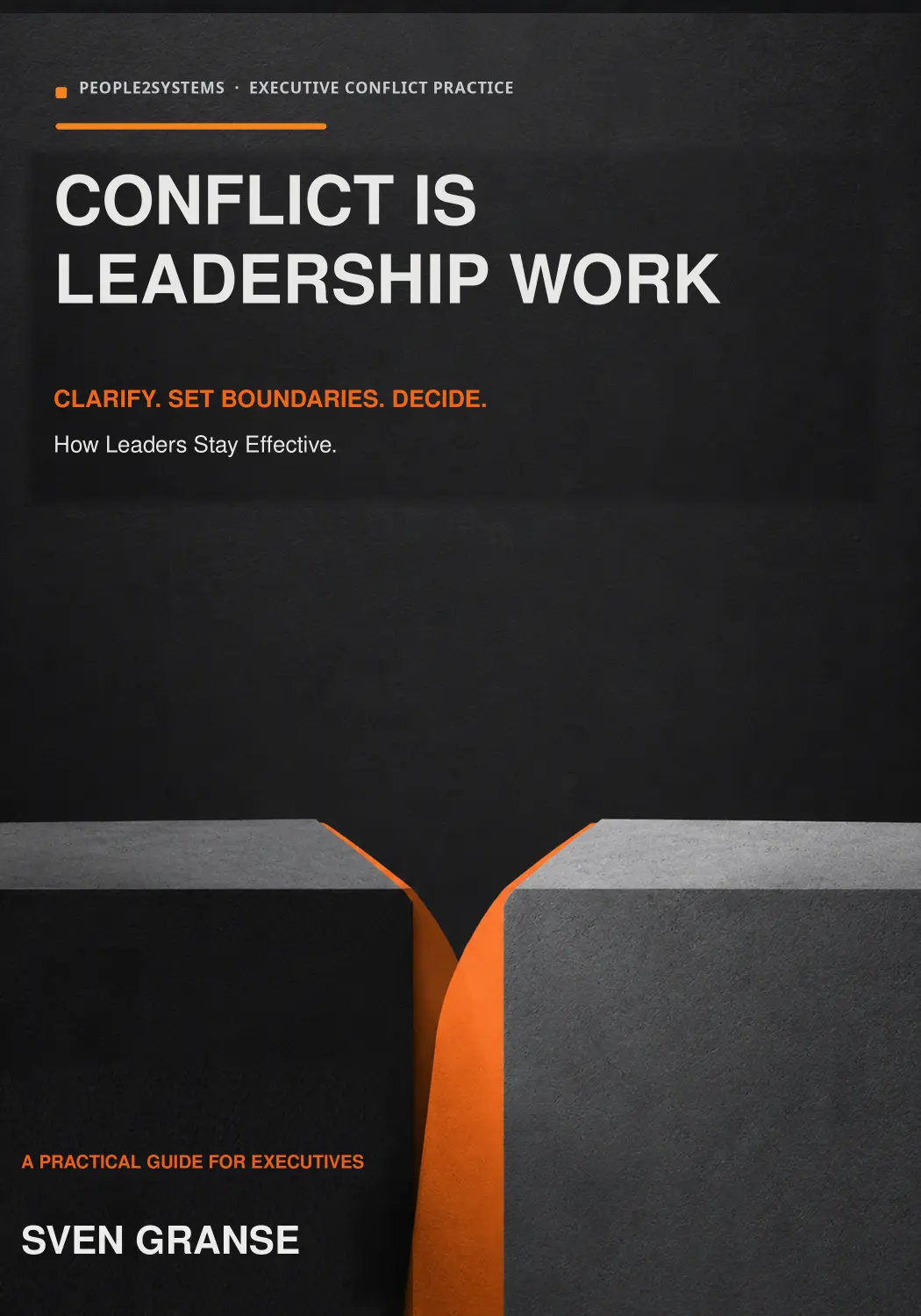
people2systems · Executive Conflict Practice
Clarify. Set boundaries. Decide. How leaders stay effective.
Executive conflict competence is not about talking every problem through. It is about choosing a responsible intervention when several plausible truths, power imbalances and uncertainty coexist.
Hardcover · Paperback · Kindle · Available now on Amazon
When an invitation to talk is no longer enough
Conflict may involve relationships, roles, power, team dynamics and organisational structures at the same time. Intervene too quickly at the communication level and you may address the wrong layer.
Everyone sounds professional. Yet decisions remain stuck – and the real meeting begins in the corridor.
Both sides have plausible stories. The system they create together remains invisible.
Leaders moderate, translate and soothe until nobody has to speak directly or carry responsibility.
Three guiding questions
The book connects conflict diagnosis with leadership decisions – from a direct conversation to a responsible separation.
Which levels are active at the same time – and which can I influence?
Which escalation dynamic is already shaping what remains possible – and safe?
Conversation, facilitation, coaching, system change, the use of authority – or separation?
Inside the book
Three maps provide the through-line: Glasl’s stages of escalation, the Drama Triangle and five leadership roles for conflict situations. They are joined by conversation models, diagnostic questions and anonymised cases from leadership, mediation and organisational development.
A thought from the book
“Possible may mean a conversation. A boundary. A new architecture. Or a clean separation.”From “A word before we begin: my view, not the truth”
Who it is for
Not a recipe book for harmony, but an invitation to distinguish earlier and take responsibility more clearly.